
Most African businesses start the same way: solving a real problem for real people in a specific...
A podcast for founders’ personal branding does something no LinkedIn post can match. It lets people hear you think in real time. Investors, partners, and customers form opinions within seconds. That voice in their earbuds builds quick familiarity.
Personal branding has always mattered for entrepreneurs. Using a podcast for founders personal branding shapes how deeply that brand registers. Audio creates intimacy that text struggles to replicate. Founders using audio gain an edge in earning trust at scale.
For many African founders, this matters even more. You are often building across borders, selling into markets where buyers want strong signals of credibility, and navigating ecosystems where warm introductions still carry disproportionate weight. A podcast becomes a portable trust mechanism: it travels ahead of you, introduces your values, and demonstrates competence before a meeting ever gets booked.
Most importantly, a founder podcast is not just “content.” It is a strategic asset that supports fundraising, hiring, partnerships, community building, and category positioning. When designed intentionally, it becomes your long-term distribution channel and a durable record of how you think, build, and lead.
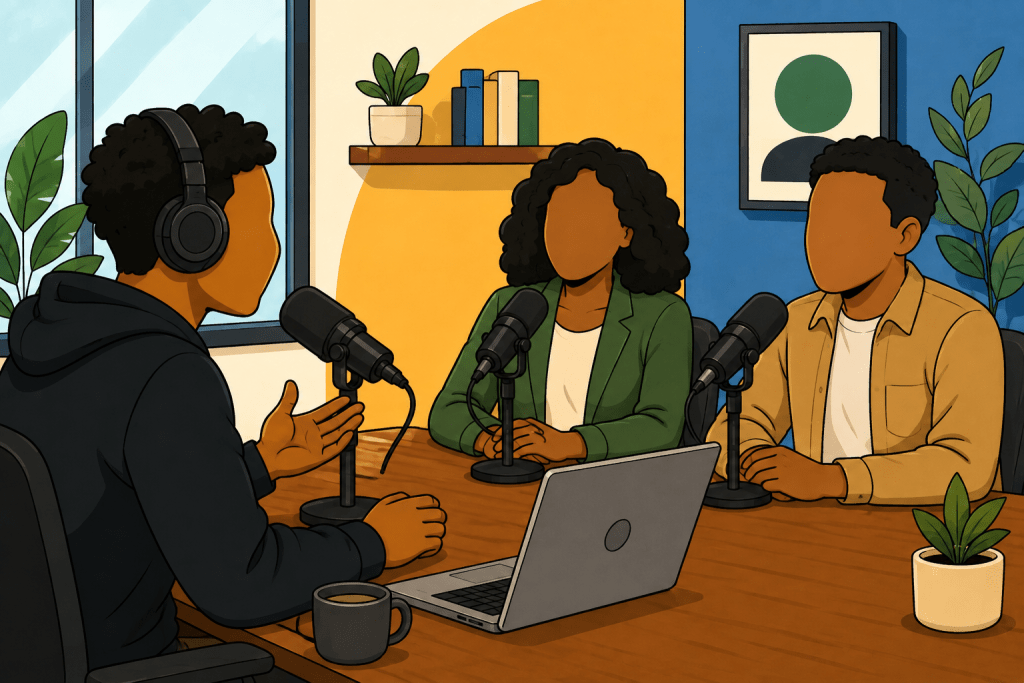
Written content gets skimmed, but audio gets absorbed. Using a podcast for founders personal branding shows your conviction and thought process. Listeners pick up on nuances that a polished blog post misses. That key difference matters immensely to modern founders.
Text can be edited into perfection, and that is exactly why it sometimes feels “too perfect.” Audio reveals the human behind the strategy. When you explain a hard decision, talk through a product trade-off, or describe what surprised you in a market, the honesty in your voice communicates competence better than generic brand messaging ever will.
In practical terms, podcasts reduce the distance to your audience. A podcast for founders personal branding fits into a listener’s daily commute. That repeated time-on-voice builds deep familiarity. Ultimately, that familiarity directly drives perceived trust.
People trust voices. A well-articulated story on a podcast lets listeners hear your pauses, your emphasis, and your energy. These micro-signals communicate authenticity far more effectively than carefully edited copy.
Think about founders associated with deep expertise. Many did not build reputations through blog posts alone. Using a podcast for founders personal branding showcases unfiltered, real thinking. Showing up consistently in audio builds lasting authority.
There is also a perception advantage: if you host a podcast, many people assume you have access, perspective, and consistency. Even before someone evaluates the content, the format signals that you are active in the ecosystem and confident enough to speak publicly.
A podcast for founders personal branding creates a recurring platform to control your narrative. You select the guests and frame the questions. Over time, that editorial direction positions you as an industry thought leader. You actively shape conversations rather than simply reacting.
This positioning compounds. Each episode becomes a searchable asset that works for your personal brand months or even years after you publish it.
More importantly, your podcast helps you build a “point of view library.” When you consistently explain what you believe about product, distribution, hiring, regulation, or growth, you stop being interchangeable. You become the founder with a recognizable lens on the market, which is exactly what attracts aligned investors, customers, and talent.
| Founder Branding Asset | What It Does | Why It Works Well in African Markets |
|---|---|---|
| Podcast (Audio + Video) | Builds trust through voice, presence, and consistency | Cross-border audiences connect faster with accents, context, and real storytelling |
| Short clips | Creates shareable moments that travel on social platforms | Easy to distribute across WhatsApp, Instagram, TikTok, and LinkedIn |
| Show notes + transcripts | Improves search visibility and content reuse | Supports multiple regions and language adaptations over time |
Starting a podcast without a clear strategy leads to abandoned shows. Successful founders treat a podcast for founders personal branding like a product release, not a hobby. They build systems that sustain the show and steadily grow their audience.
That means you define your target listener, your outcomes, and your operational plan before you record. You should know why the podcast exists and what success will look like after 90 days. Without that clarity, it becomes easy to miss episodes, drift into random topics, and lose the audience you were trying to build.
Too many founders launch “general business” podcasts that blend into the noise. Your personal brand gets sharper when your show occupies a specific territory. A fintech founder discussing cross-border payments in African markets stands out more than one hosting another “entrepreneurship tips” show.
Start by identifying the intersection of three things:
That overlap is your content sweet spot.
To sharpen your niche further, write a single sentence that begins with: “This show is for…” For example: “This show is for African operators building B2B SaaS who want real playbooks for enterprise sales, pricing, and retention.” If your sentence still sounds broad, keep narrowing until it points to a clear listener and a clear set of problems.
Then define 3–5 recurring content pillars. These pillars become your editorial guardrails and prevent topic drift. Common pillars for founder podcasts include: market deep-dives, operator playbooks, fundraising reality checks, hiring and culture, and customer stories. When each episode fits at least one pillar, your show feels cohesive and your brand becomes more memorable.
Founder podcasts succeed when they support tangible goals. Decide which outcomes matter most right now, and align your episode strategy accordingly.
When you know your objective, you can make better decisions about topics, guests, and calls to action. The show becomes a business lever, not a vanity project.
Solo episodes showcase your thinking. Interview episodes borrow credibility from your guests and expand your network. Most successful founder-hosted podcasts mix both.
Here’s an honest trade-off worth acknowledging: solo episodes are harder to sustain because they demand more original thinking per episode. Interviews are easier to produce but can dilute your personal brand if every episode becomes about the guest rather than your perspective.
If you want interviews to strengthen your brand, structure them so your perspective remains visible. Open with your thesis for the episode, ask questions that reflect your operating philosophy, and close with a short summary of what the conversation means for your audience. That framing signals leadership rather than passive hosting.
Many founder podcasts fail because the format is reinvented every week. A repeatable structure reduces cognitive load and improves quality. Consider a consistent outline such as:
This structure helps your audience know what to expect and helps you produce efficiently when your calendar gets busy.
You don’t need a professional studio to get started, but you do need a few basics for both audio and video. Aim for “clear, consistent, and watchable.”
| Component | Minimum Viable Setup | Upgrade Path | Practical Notes |
|---|---|---|---|
| Microphone | USB mic or smartphone + clip-on lav | XLR mic + audio interface | Audio quality matters more than camera quality. |
| Camera | Smartphone or laptop camera | Mirrorless/DSLR or high-quality webcam | Record at 1080p when possible; keep framing consistent. |
| Lighting | Window light + facing the light source | Softbox or ring light | Bad lighting makes good video look cheap. |
| Recording (Remote) | Riverside.fm or Zencastr | Local backups + producer workflow | Always test guest audio/video before recording. |
| Editing | Audacity (audio) + basic video editor | Outsource to an editor | Standardize intros/outros for speed. |
Spending three months researching equipment instead of recording your first episode is the biggest trap new podcasters fall into. Ship early and improve as you go.
One additional “setup” element that founders underestimate is environment. Echo, background noise, and inconsistent acoustics can ruin otherwise good episodes. You do not need a treated studio, but you should record in a quiet space, close doors and windows, and use soft furnishings (curtains, rugs, cushions) to reduce reverb. If you record remotely, ask guests to avoid cafés and to use headphones to reduce audio bleed.

Publishing episodes consistently is only half the equation. The other half involves deliberately turning your podcast into a personal branding engine that reaches people beyond your existing network.
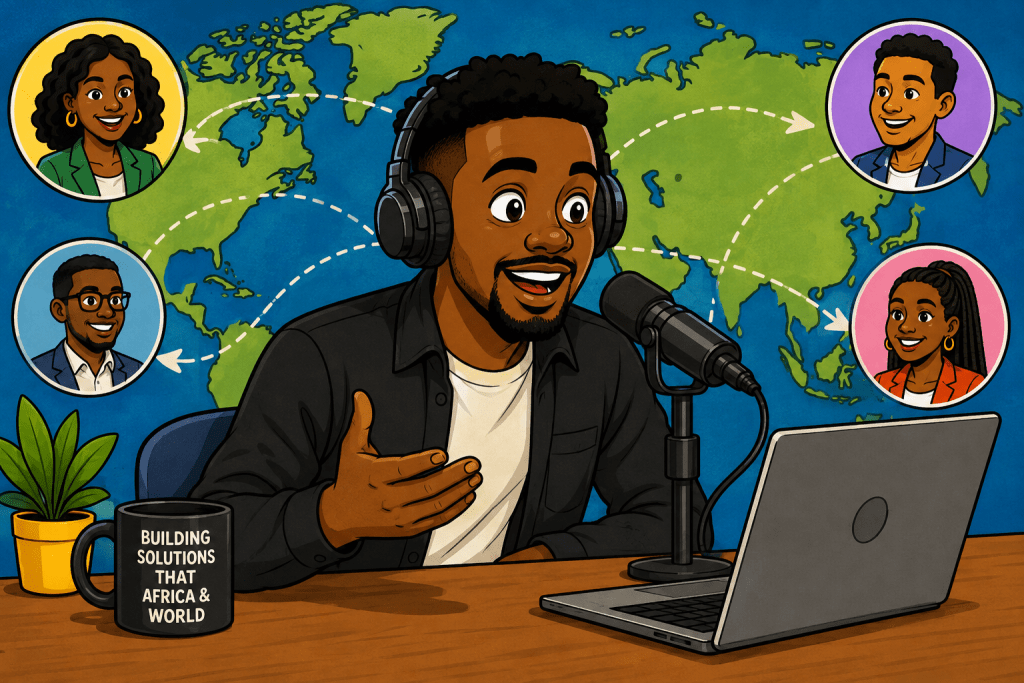
The key shift is to treat every episode as a distribution package, not a single upload. Your job is to make it easy for your best ideas to travel: across platforms, across communities, and across borders. When done well, your podcast becomes the source material for multiple channels, and your voice becomes the consistent thread connecting them.
A single 30-minute episode contains enough material for a week’s worth of content across platforms. Consider a distribution checklist:
This multiplier effect is one of the strongest arguments for podcasting as a personal branding strategy. You record once and distribute everywhere. African entrepreneurs building visibility across multiple markets benefit enormously from this approach because it stretches limited content budgets across channels.
To keep repurposing efficient, identify “clip moments” during recording. These are short segments where you state a clear thesis, share a surprising insight, or explain a practical framework. If you mark timestamps as you record (even with quick notes), editing becomes faster and your clips become sharper.
Every guest you invite brings their own audience. When a respected founder or industry expert shares your episode with their followers, you gain credibility by association. Be intentional about who you invite. Prioritize guests whose audiences overlap with the people you want to reach.
Most guests want to promote their appearance but won’t create their own graphics from scratch.
Also think beyond “big names.” In many markets, the most valuable guests are operators with highly specific knowledge: heads of compliance, payments infrastructure experts, growth leads, policy voices, and founders building in underserved regions. These guests may not bring massive follower counts, but they bring credibility and depth that differentiates your show.
Chasing viral moments leads to erratic publishing and topic drift. The founders who build the strongest personal brands through podcasting commit to a predictable schedule and stick to it. Biweekly episodes released on the same day build listener habits that compound over months.
Skip the temptation to publish daily. Burnout kills more founder podcasts than low download numbers. A sustainable pace you can maintain for two years beats an ambitious schedule you abandon after eight weeks.
If you want an operational approach, treat podcasting like a pipeline: ideation, booking, recording, editing, distribution, and measurement. A lightweight checklist for each stage reduces last-minute scrambling and prevents missed releases. The founders who win here are not the most creative; they are the most consistent.
Great conversations do not automatically get discovered. Improve your discoverability by making your content easy for both search engines and humans to understand.
For African founders operating across multiple regions, transcripts and clear descriptions support easier language adaptation and localization. Even small optimizations compound across dozens of episodes.
A podcast for founders personal branding amplifies brand storytelling and builds lasting audience trust. Hustle Africa specializes in helping African brands craft content strategies that make their unique stories resonate with the right audiences.
Some errors don’t show up in your download numbers right away. They erode the personal brand you’re trying to build, and by the time you notice, you’ve reinforced the wrong associations with your name.
Two additional mistakes are common for founder-led shows and can quietly dilute your positioning.
Finally, avoid using your podcast as a substitute for real business execution. Your content should reflect the work, not replace it. The most compelling founder podcasts are grounded in current, lived operating experience.
Aim for a length that matches the complexity of the topic and your audience’s listening habits. Many founder shows perform well in the 20 to 45 minute range, with shorter solo episodes often working better than long monologues.
If you are unsure, start with a simple standard: 20–30 minutes for solo “playbook” episodes and 30–50 minutes for interviews. Then review retention and completion data after a few episodes and adjust based on what your audience actually finishes.
Both is ideal. Publish full episodes as video (for discoverability and clips) and distribute the audio version to podcast platforms (for convenience and loyalty). This approach maximizes reach while serving different consumption preferences across African and global audiences.
If you are resource-constrained, prioritize audio quality first. A strong audio experience will retain listeners; a poor audio experience will lose them even if the video looks good.
Pick a name that signals your niche and makes your ideal listener feel instantly included. Avoid clever but vague titles, clarity tends to win in search, sharing, and first impressions.
A practical test: if someone sees the name in a directory, can they predict the topic in five seconds? If not, consider adding a clear subtitle or adjusting the title to include your niche, region, or audience.
Create a one-page brief with the episode goal, 5 to 7 priority questions, and 2 optional follow-ups per question. Send your guest a simple agenda and positioning statement so the conversation stays focused and aligned with your brand.
Also prepare a “credibility primer” for yourself: the guest’s key milestones, strong opinions, and relevant context in the market. That preparation leads to better questions and a more confident hosting style.
Start with communities where your audience already gathers, such as niche newsletters, Slack groups, or industry events, then offer a specific episode that solves a clear problem. Consistent cross-promotion with complementary creators can also compound growth faster than posting links alone.
In addition, design a simple referral loop: ask listeners to share the one episode that best represents the show. When you make sharing specific (“Send this to one founder who is pricing enterprise contracts”), you increase the likelihood that people actually act.
Track listener retention, episode completion rate, website clicks from show notes, video watch time, and the number of inbound conversations the podcast creates. Qualitative signals, like guest referrals and the quality of introductions you receive, often reveal brand impact earlier than raw audience size.
If your goal is business growth, also track downstream outcomes: demo requests that mention the podcast, partnership messages, speaking invitations, and candidate applications referencing a specific episode.
Offer one relevant next step that continues the episode’s value, such as a checklist, template, or private Q&A signup. Keep the language practical and listener-first, the goal is a helpful transition, not a hard pitch.
As a rule, keep your call to action aligned with the topic. If the episode is about hiring, offer an interview scorecard or a role-definition template. If the episode is about expansion, offer a market entry checklist. Relevance is what makes it feel helpful rather than promotional.
Outsource when editing consistently delays publishing or when your time is better spent on content strategy and relationships. A lightweight workflow where you handle recording and approvals while a producer handles audio cleanup, video pacing, captions, and uploads is often the most efficient starting point.
Many founders begin by outsourcing the most time-consuming parts first: editing, clipping, captions, and uploading. That approach maintains your voice while protecting your schedule.
A podcast for founders isn’t just another marketing channel. It’s the most direct way to let your audience experience your thinking, your values, and your vision before they ever meet you. The founders who commit to audio and video build personal brands with a depth that social media profiles alone can’t replicate.
Start with a clear niche. Record your first three episodes before you obsess over equipment or distribution. Stay consistent, repurpose aggressively, and let your authentic voice do what it does best: build real trust with real people.
When you approach podcasting with intention, you also create a long-term record of your leadership. Over time, that record becomes a competitive advantage: the market can hear how you reason, how you respond to complexity, and how you learn. That is the kind of credibility that accelerates opportunities.
Ready to turn your founder story into a brand that resonates? Hustle Africa helps African entrepreneurs craft strategic content that makes their brands unforgettable. Reach out and start building the visibility your business deserves.